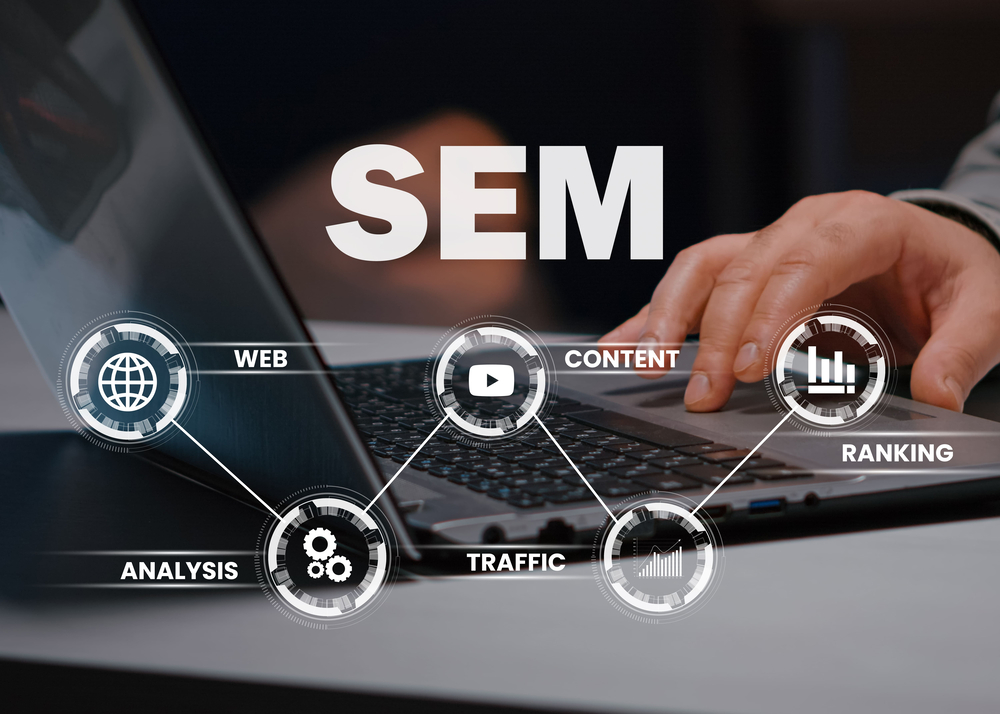
SEM Watershed 2026: Is Your Budget Going to "Core Search" at 7% Growth or "Retailer Search" at 12%?
For US enterprises operating in New York, Los Angeles, or Chicago, the 2026 search marketing budget allocation stands at an unprecedented crossroads. Over the past few years, while Google and Bing remain dominant, the meteoric rise of Retail Media Networks (RMNs) like Amazon Advertising, Walmart Connect, and Target Roundel has fundamentally shifted the growth curve of search advertising. According to the latest reports from the US Digital Marketing Association, the annual growth rate for Core Search has slowed to approximately 7%, while Retailer Search is surging at a compound annual growth rate of 12%.
For local businesses and multinational brands alike, this is not merely a question of budget ratios; it is a strategic realignment regarding how to capture search intent in the world’s most competitive market. If you continue to follow the logic of five years ago, relying solely on general search engines without considering the traffic dividends within retailers, your Customer Acquisition Cost (CAC) will rapidly spiral out of control under the dual pressures of inflation and intensifying competition.
Table of Contents
- The Shift in Traffic Power: How Retail Media Networks Redefine Search Value
- Data Integration and Automation: Regaining Decision Clarity in a Fragmented Ecosystem
- Topkee’s Competitive Edge: A Decision Hub Driven by Proprietary Cross-Platform Data
- The 2026 Budget Optimization Path: Shifting from Single Reliance to Hybrid Search Strategies
- Conclusion: Making Every Marketing Decision Withstand Scrutiny
The Shift in Traffic Power: How Retail Media Networks Redefine Search Value
In the US consumer environment, search behavior is becoming highly fragmented. In the past, consumers might search for product reviews on a general search engine before placing an order; however, in 2026, over 60% of online product searches in the US start directly on retail platforms. This shift directly impacts how companies perceive sem marketing. The advantage of retail media lies in its possession of bottom-of-the-funnel data closest to purchase conversion, allowing brands to directly link Return on Ad Spend (ROAS) to actual orders when executing sem marketing campaigns, rather than just focusing on click-through rates or impressions.
To stay competitive in this environment, marketers must continuously utilize Google Search Console to analyze the health of traffic on the general search side while cross-referencing it with internal retailer data. Because retailer search is more precise, it places higher demands on sem marketing strategic layouts: you must understand the intent difference between a consumer searching for stainless steel tumblers on Amazon versus best camping gear on Google. Ignoring this difference means you may be over-consuming on a 7% low-speed track while missing the 12% retail dividend.
Furthermore, as the Federal Trade Commission (FTC) strengthens data privacy regulations in the US, the first-party data provided by retailer search becomes even more precious. When formulating annual plans for sem marketing, companies must consider how to use this closed-loop data to offset the loss of precision following the disappearance of cookies. Only by combining the breadth of traditional search with the depth of retail search can one achieve sustained growth in the mature and demanding US market.

Data Integration and Automation: Regaining Decision Clarity in a Fragmented Ecosystem
Faced with diverse advertising platforms, data silos have become the biggest pain point for US CMOs. When you run search ads on Amazon while simultaneously running dynamic product ads on Facebook, data overlap and conversion attribution become extremely complex. During the execution of sem marketing, without a unified data perspective, you might double-count conversions, leading to ineffective budget waste. Many local US brands use Facebook Ads Manager to observe search increments driven by social media, but this is only one piece of the puzzle.
The real challenge lies in integrating these fragmented signals into actionable decision-making commands. Efficient sem marketing operations require automated tools to balance bidding between core search and retail search. For instance, during New York Fashion Week, search volume for brand terms on general search might surge, while product conversion rates on retail platforms might peak two weeks later. If your sem marketing system cannot perform cross-channel predictive analysis, you will struggle to optimize dynamic budgets.
This is why an increasing number of US digital marketing teams are introducing artificial intelligence into their sem marketing processes. Through AI agents, marketers can monitor ROAS fluctuations between various retail media and core search platforms in real time. In this technology-driven environment, decision clarity no longer relies on intuition but on technical infrastructure capable of penetrating data silos.
Topkee’s Competitive Edge: A Decision Hub Driven by Proprietary Cross-Platform Data
When handling a complex search marketing ecosystem, Topkee demonstrates unparalleled advantages. As a digital growth partner deeply involved in the US market, Topkee understands that simple platform tools are no longer enough to handle the competition of 2026. Its core advantage lies in its proprietary TTO CDP product, an internal system that acts as the neural hub of search marketing, seamlessly integrating data from Google, retail media, and other social channels. For enterprises optimizing sem marketing effectiveness, this means they gain a true single view of the actual contribution of every dollar spent across different lifecycle stages.
Topkee utilizes its internal TTO CDP product to provide powerful ID Mapping capabilities, tracking user behavior trajectories across devices and platforms within the US. When a brand conducts sem marketing deployments, Topkee’s system can automatically identify users who searched on retail platforms but completed a click on a general search engine, thereby optimizing bidding logic. This technical advantage is particularly important in the US, where labor costs are high, as it significantly reduces the time spent on manual reporting, allowing teams to focus on more creative strategy building.
Furthermore, Topkee maintains the highest US standards for data privacy and compliance. This ensures that brands do not have to worry about legal risks while utilizing high-value search data to optimize sem marketing performance. Through Topkee’s integrated solutions, brands can establish a strong synergy between core search and retailer search, transforming the 12% retail growth dividend into sustainable corporate profit. In the world of sem marketing, only companies supported by such a technical foundation can truly achieve a data-driven transformation.
The 2026 Budget Optimization Path: Shifting from Single Reliance to Hybrid Search Strategies
Heading into 2026, the budget allocation of US companies must be more flexible. A successful hybrid search strategy should dynamically adjust based on product categories and audience characteristics. For example, in the B2B marketing sector, utilizing job titles and company data obtained through LinkedIn Campaign Manager can complement exact match keywords on the search side. This illustrates that sem marketing is no longer confined to a single search box but has evolved into the comprehensive management of audience intent.
For consumer electronics or beauty brands, it is recommended to allocate 40% of the search budget to retail media search, 50% to core search (for brand defense and general term acquisition), and the remaining 10% to exploring emerging AI search platforms. The core of this allocation logic lies in optimizing the overall marginal profit of sem marketing. Retailer search is responsible for conversion, while core search handles the top-of-funnel expansion. If you lean too heavily toward one side, you will either face the predicament of high acquisition costs or suffer from declining retail conversion efficiency due to a lack of brand awareness.
When implementing sem marketing optimization in practice, companies should establish a weekly dynamic review mechanism. Use real-time data provided by each platform to analyze the traffic linkage between various retailer platforms and Google search. In the volatile US business environment, brands that can flexibly adjust their sem marketing resource allocation tend to show greater resilience during industry downturns. This is not just a competition of technology, but a competition of the depth of understanding the essence of search marketing.
Conclusion: Making Every Marketing Decision Withstand Scrutiny
2026 is the year of value reconstruction for search marketing. Whether it is the stable 7% growth of core search or the 12% explosion of retail media search, enterprises must establish a unified decision-making framework. Behind budget allocation lies the utilization rate of data assets and the insight into consumer behavior.
Through the powerful support provided by Topkee’s proprietary internal tools, brands can break down the data barriers between agencies and platforms. In this new AI-driven, privacy-first era, successful search marketing is no longer about who spends the most money, but who can make every decision withstand scrutiny, ensuring every cent of the budget produces quantifiable growth. The watershed of search marketing has appeared; choosing to stand on the correct side of data-driven strategy will determine your brand's market position for the next five years.

You might also like
Win the Retailer Search Battle
Master the 5-step strategy to dominate Amazon, Walmart & beyond

2026 Creator Economy Trends
Transform Your Content Strategy for the U.S. Market

Super Click Theory: Boost Conversions
Transform SEM with high-intent clicks that drive real business growth